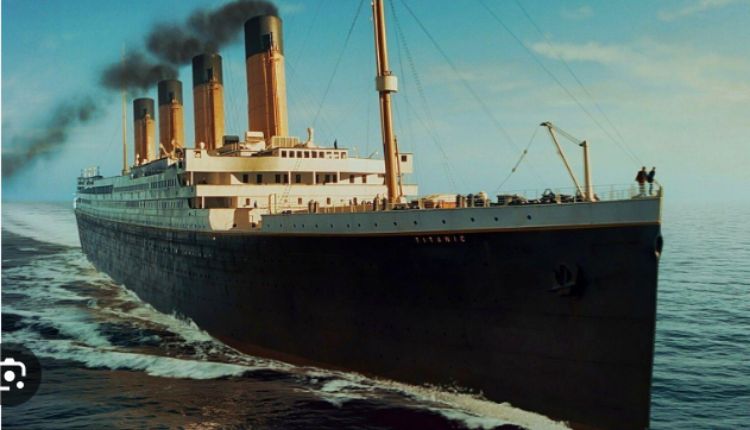
Step back in time to see what happened each day of the maiden voyage of the Titanic, which struck an iceberg and sank in the North Atlantic.

Lookout Frederick Fleet reports a large, moving object to the bridge. It’s an iceberg, and it hits the ship, rupturing five watertight compartments.
April 10, 1912
April 10: The titanic timeline departs from Southampton, England, on her maiden voyage across the Atlantic to New York. She passes through calm waters on a clear, sunny day. Throughout the day, seven iceberg warnings are received but none reach the bridge.
At 11:40 p.m., lookout Frederick Fleet spots an iceberg dead ahead. He rings the ship’s bell three times and telephones the bridge: “Iceberg right ahead!” Sixth Officer Moody immediately sends a signal to the engine room ordering them to stop and turn the ship hard starboard. First Officer Murdoch immediately closes the ship’s watertight doors below the waterline. The iceberg brushes Titanic’s starboard bow side but does not strike her. Thirty-seven seconds pass from sighting to impact.
Several ships change their course to assist the Titanic, including the Cunard liner Frankfurt. However, the Frankfurt is still some 170 nautical miles (315 km) away to the south. Captain Edward Smith calls the passenger cabins to order and prepare for a rescue.
Carpets are being laid, decorations are being finalized, and passengers and crew begin to board their lifeboats. Isidor and Ida Straus refuse to disobey the captain’s order of women and children into the lifeboats first and stay with their husbands. They will both die when the Titanic sinks. The rest of the passengers are able to escape into lifeboats. The first boat is lowered into the Atlantic.
April 11, 1912
At 10:30 PM the Titanic passes a large ice field and receives several ice warnings. Lookout Frederick Fleet spots an iceberg dead ahead and calls the bridge to report it. The captain sends a signal, “Iceberg Right Ahead!”
Sixth Officer Moody responds and orders the engines stopped. He also instructs the lookout to give a report. The lookout reports a huge chunk of ice ahead and says it is heading straight for the ship. The captain orders the ship turned hard left. This is done, but by the time the turn is complete the iceberg has passed the Titanic.
First Officer William Murdoch closes the watertight doors. Fourth Officer Boxhall is sent to inspect the damage, which he finds was caused by the iceberg’s blunt force. He finds that the forward area of the hull is flooded. Boxhall reports his findings to the captain.
The captain, Edward Smith, is told that the first six watertight compartments have been compromised and that the ship will only stay afloat for two hours. He orders the lifeboats to be lowered. Women and children are placed in the boats first.
The iceberg collides with the starboard bow of the Titanic, causing it to sink in a nearly vertical position. The stern rises to a level position, then slowly begins filling with water as the hull is compromised. This is the start of the slow, gradual sinking that would eventually claim the Titanic.
April 12, 1912
The White Star Line’s new luxury steamship Titanic leaves Southampton, destined for its maiden voyage to New York City. A crowd of 100,000 people lines the waterfront to see her sail by, cheering and waving handkerchiefs.
Around noon, senior wireless operator Jack Phillips begins receiving iceberg warnings from other ships, including the British liner Empress of Britain. One of the icebergs is seen by lookout Frederick Fleet, who alerts the bridge. First Officer William Murdoch is instructed to turn the ship hard to starboard, but her right side still scrapes against the iceberg.
The crew prepares lifeboats and gets passengers and crew up on deck. The 20 boats have room for only about half of the 2,200 people on board, so women and children are placed in them first. The last lifeboat, number 13, is lowered into the water.
As the Titanic sinks, collapsible A is swept off the deck, and only 12 people get into it. As they row away from the ship, they encounter Captain Smith, who tells them to ignore his commands and search for survivors because they will only find “stiffs”. This enrages some of the passengers, especially Molly Brown, and she kicks him off the boat. The survivors in the other boats begin to look for survivors. However, they will not find any for several hours. The rescue ship Carpathia, which learned about the sinking from the Californian, arrives 58 miles (4 hours) later.
April 13, 1912
The Titanic departs Southampton on its maiden voyage to New York City. The passengers and crew are still acquainting themselves with the ship’s many public rooms and hallways when at 10:30 a.m. the first of several ice warnings from Empress of Britain comes through on the wireless. The second warning, at 8 p.m., is prompted by the iceberg-size breakage of six mooring ropes on New York, which causes her stern to swing toward Titanic and threatens a collision. Quick action averts the danger, but departure is delayed for an hour.
At 9:40 p.m., the lookouts spot an iceberg dead ahead and alert First Officer Murdoch, who orders a hard starboard turn. The ship hits the iceberg a glancing blow, but water begins to fill the next five hull compartments. Ship carpenter Thomas Andrews informs Captain Smith that the ship will probably stay afloat for only two hours.
The first lifeboat to be lowered, number 7 on the starboard side, carries 27 people even though it has room for 65. Lookout Frederick Fleet and passenger Molly Brown are among the occupants. The boat is commanded by Quartermaster Robert Hichens, who later draws the ire of some other occupants by saying, “There aren’t any women aboard.” The next boat, number 9, is lowered with more than a dozen men. After it leaves, a man jumps into it from the deck above, injuring himself.
April 14, 1912
April 14, 1912: The luxury liner Titanic leaves Southampton, England for New York City. The maiden voyage of this huge, luxurious ship is filled with anticipation and promise. The Titanic has been hailed as virtually unsinkable, thanks to her system of watertight compartments and doors.
Lookouts spot an iceberg dead ahead. Sixth Officer Moody on the bridge hears the warning, immediately calls “hard a starboard” to the helmsman and activates a lever that closes all watertight doors below the surface.
At 11.40 PM, the iceberg collides with Titanic. Its front part disappears below the surface, followed two minutes later by the back part of the ship. The ship breaks apart and sinks to the bottom of the Atlantic, causing the deaths of more than 1,200 people.
Lifeboats begin to be readied for launch, and passengers are ordered to board them in accordance with the law of the sea — women and children first, then men. The order is obeyed, though Second Officer Lightoller insists on letting aboard some of the wealthy passengers he knows, including Madeleine Astor, wife of financier John Jacob Astor IV. Lightoller’s actions are considered heroic by some and cowardly by others, including Astor’s husband. Astor, who is five months pregnant, declines to board. The other women, however, go into boat number 12. This boat is swept away in the rising waters, but its crew members save 20 people.
April 15, 1912
On April 14, 1912, at 11:40 p.m., lookout Frederick Fleet spots an iceberg dead ahead of the Titanic. Ship’s first officer, William McMaster Murdoch, orders a hard starboard turn, but the Titanic’s right side scrapes against the iceberg. Water immediately fills successive compartments, causing the bow to sink and the stern to rise to an almost vertical position above the water. The crew tells Captain Edward Smith the ship can stay afloat for only two hours.
At the time of the collision, the ship was sailing in an area of the gulf stream that would normally be free of icebergs. However, the iceberg was in an unusual location because of shifts in the warm and cold waters of the North Atlantic. The sudden appearance of the iceberg was also due to an unusually heavy amount of field ice, which had jammed the gulf stream in that direction.
At the bridge, Sixth Officer Moody receives a call from the bridge that reads, “Iceberg right ahead!” He immediately sends a message to Murdoch: Stop engines; full astern; close all watertight doors below the waterline. Murdoch obeys. His actions save many lives, including those of stoker and lookout Thomas Brown, who jumps into lifeboat Number 5 as it is being lowered and injures his leg. He is given a medal for his action by the British Board of Trade.
Titanic Timeline Conclusion
The Titanic’s tragic voyage in 1912 remains one of the most infamous maritime disasters in history. Despite its advanced design, the ship’s collision with an iceberg led to the loss of over 1,500 lives. The event sparked significant improvements in maritime safety and continues to captivate the world’s imagination as a cautionary tale.
FAQs:
- How many people survived the Titanic disaster? A: Out of approximately 2,224 passengers and crew onboard, around 706 people survived the Titanic disaster. The majority of survivors were women, children, and some crew members who managed to secure spots on lifeboats.
- What were the major lessons learned from the Titanic tragedy? A: The Titanic disaster brought several crucial lessons. It highlighted the importance of sufficient lifeboats for all passengers, improved regulations for maritime safety, and better communication systems at sea. Additionally, it led to the establishment of the International Ice Patrol to monitor iceberg risks in the North Atlantic.